
Affiliate disclosure: Kyaraban may earn a commission from qualifying purchases made through links in this article, at no additional cost to you.
There is a distinct kind of friction that comes from sitting down at a cluttered workspace.
Power cords drift across the desktop. Charging cables disappear behind furniture. Adapters, notebooks, keys, and small electronics gradually occupy every available surface until the desk stops feeling like a place designed for concentration and starts feeling like temporary storage.
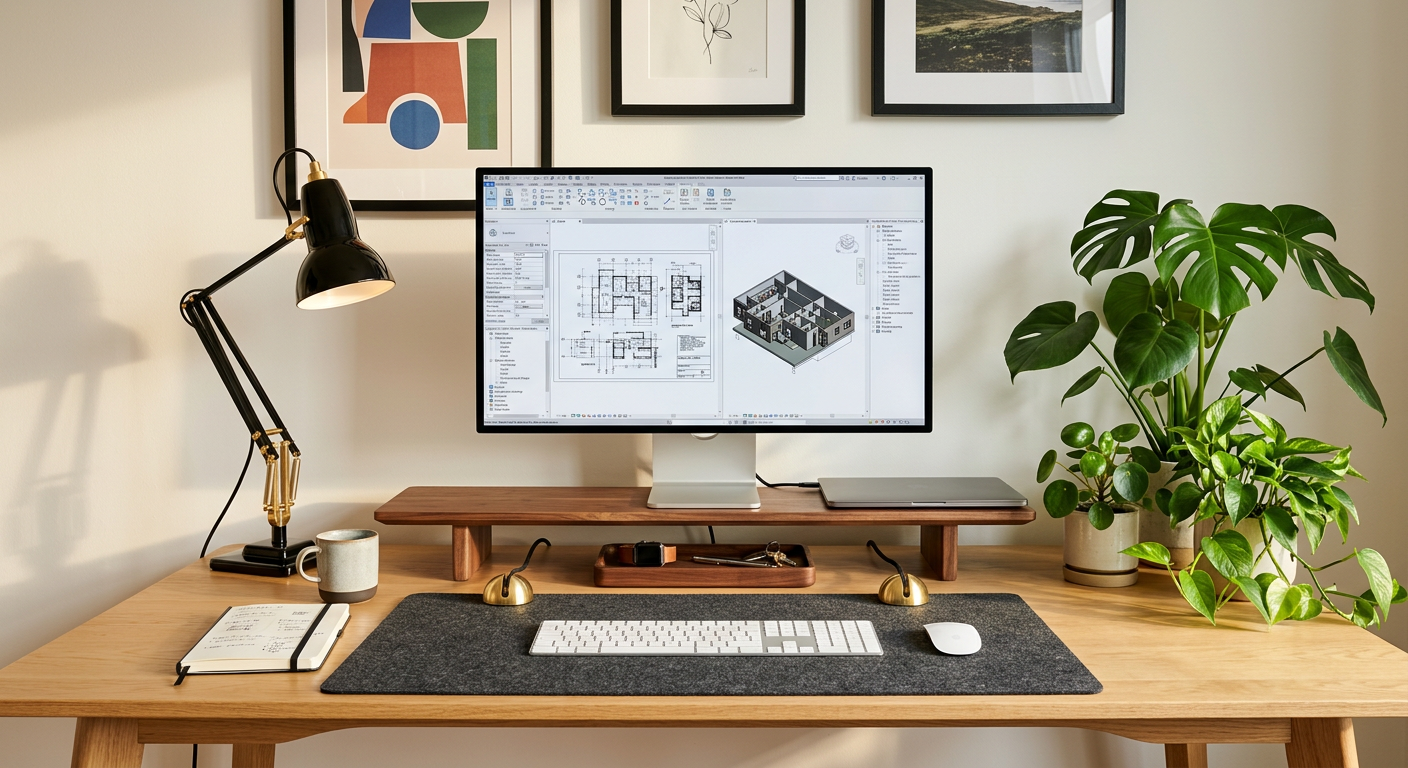
A better workspace is not about hiding every trace of work. It is about giving the objects you use every day a deliberate place within the architecture of the desk.
Solid walnut, anodized aluminum, dense wool felt, leather, and metal do more than organize the surface. They add weight, texture, and permanence to a part of the home increasingly dominated by glass screens and plastic electronics.
Five pieces for a more resolved workspace
Graf Lantz Mosen Merino Wool Large Desk Pad →
COREMINDED Solid Walnut Monitor Stand →
The Foundation: The Desk Shelf
The anchor of a well-considered workspace is often the desktop tier. Elevating a monitor can improve sightlines, but just as importantly, it changes the vertical geometry of the workspace.
A substantial wooden shelf gives the display a visual foundation while creating usable space beneath it for a keyboard, notebook, hub, or other equipment that would otherwise live permanently on the desktop.
- Solid timber construction: Walnut introduces natural grain and warmth beside the hard geometry of monitors, keyboards, and aluminum electronics.
- Useful negative space: The area beneath a monitor shelf becomes part of the organization system rather than wasted surface area.
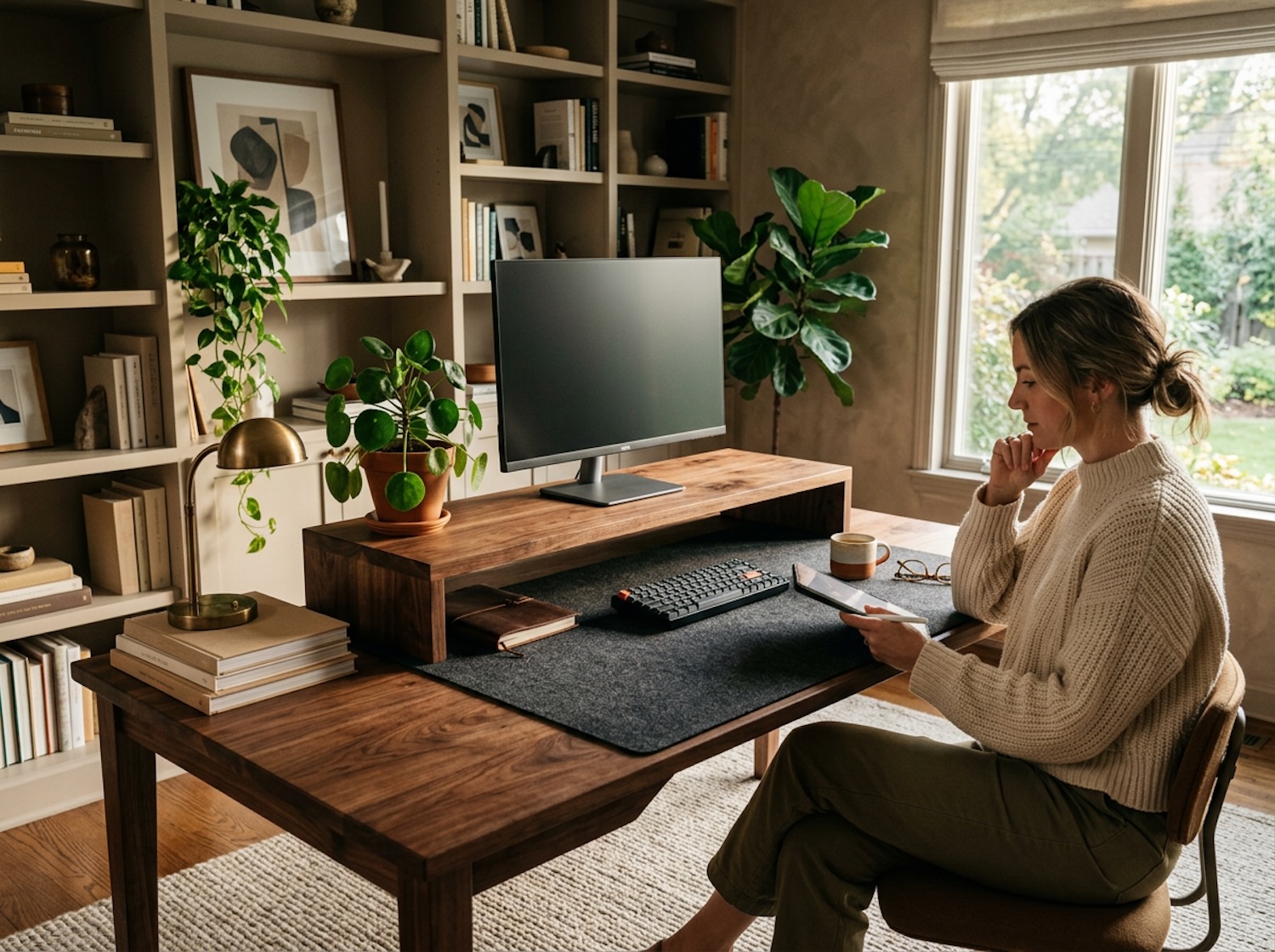
The COREMINDED solid walnut monitor stand is the sort of object we mean: a wide wood platform that functions more like a small piece of furniture than an office accessory.
Managing the Invisible: Cable Architecture
Cable management is rarely the glamorous part of a workspace, but it often determines whether the desk feels calm or perpetually unfinished.
The goal is not to pretend electronics have no wires. It is to keep those wires predictable: power hardware underneath the desk, longer runs directed away from the working surface, and the cables you actually reach for held exactly where you expect them to be.
- Weighted anchors: A sufficiently heavy desktop cable holder keeps charging cords from disappearing behind the furniture every time they are unplugged.
- Under-desk routing: Raceways and channels can direct cable runs below the desktop and keep larger power hardware away from the main working surface.
For the visible part of that system, we chose this two-pack of weighted gold metal cable holders. They solve a very ordinary problem, but the metal construction and restrained shape make them feel more at home on an intentional desk than a collection of plastic adhesive clips.

The Surface: Wool Felt and Leather
Sound and touch contribute more to the character of a desk than they are usually given credit for. A keyboard directly on a hard wooden or laminate surface can make the whole setup feel sharper and noisier than necessary.
A desk mat changes that relationship immediately. It defines the primary working zone, protects the surface below, and introduces a different material beneath the hands.
- Wool felt: Dense felt can soften keyboard noise and introduce warmth without the synthetic feel of a conventional oversized mouse pad.
- Visual zoning: A large mat creates a clear boundary for the keyboard, mouse, laptop, notebook, and other tools that belong in the active workspace.
The Graf Lantz Mosen Merino Wool Large Desk Pad is the premium version of that idea. It uses 3 mm Merino wool and measures 31 by 19.5 inches, giving it enough presence to define a substantial portion of the desk without looking like a gaming accessory.
It is also exactly the sort of Kyaraban object we are increasingly interested in: a simple functional item elevated by material choice, tactility, and restraint.
More from Kyaraban
For another look at how materials and engineering change an everyday object, read Why Japanese Gyuto Knives Feel So Different From Western Chef’s Knives.
Or explore the ritual side of good tools in Why Hand-Grinding Your Coffee Changes the Cup.
Choosing Your Workspace Elements: Five Design Essentials
You do not need to rebuild an office from scratch to make the workspace feel better. Five objects can do most of the visual and practical work.
1. The Surface: Graf Lantz Mosen Merino Wool Desk Pad
The concept: A dense natural-fiber surface that protects the desk, softens the working area, and visually groups the tools you use most often.
The Graf Lantz Mosen Merino Wool Large Desk Pad is made from 3 mm Merino wool and gives the setup the tactile quality that synthetic desk pads often lack.
See the Graf Lantz Mosen desk pad on Amazon →
2. The Ergonomic Foundation: COREMINDED Solid Walnut Monitor Stand
The concept: A real wood platform that raises the display while creating useful storage space beneath it.
The COREMINDED solid walnut monitor stand gives the monitor more architectural presence while providing room beneath for a keyboard, notebook, or smaller desktop hardware.
The important distinction here is the material. A monitor stand occupies a prominent horizontal line across the desk, so genuine walnut reads very differently from printed wood grain or lightweight composite board.
See the COREMINDED walnut monitor stand on Amazon →
3. The Control Point: Weighted Gold Metal Cable Anchors
The concept: Give frequently used charging cords enough weight and friction to remain exactly where you left them.
Our pick is this two-pack of weighted gold metal cord holders. Unlike an adhesive clip permanently stuck to the desktop, a weighted holder can remain a visible part of the workspace and move when the desk arrangement changes.
It is a small object, but that is precisely why material matters. A little piece of metal can look intentional where a little piece of molded plastic often looks temporary.
See the weighted metal cable anchors on Amazon →
4. The Pocket Catchall: Solid Walnut Valet Tray
The concept: Give the small objects that arrive with you every day somewhere to land.
A watch, keys, earbuds, wallet, loose change, or a pen are individually insignificant. Scattered across a desk, they create visual noise surprisingly quickly.
The solid walnut valet tray we chose solves that problem with almost no complexity: a simple wood catchall that keeps everyday carry together while adding another natural material to the workspace.
See the solid walnut valet tray on Amazon →
5. The Companion Object: Anglepoise Original 1227 Desk Lamp
The concept: Once the desk itself is resolved, light becomes part of the architecture.
The Anglepoise Original 1227 is different from the other objects here because it is not merely a nicer version of an anonymous office accessory. It is a genuine piece of industrial-design history.
Launched in 1935 and designed by George Carwardine, the Original 1227 uses Anglepoise’s constant-tension spring mechanism to combine adjustability with stability. Its aluminum shade and arms, chrome fittings, and substantial cast-iron base give it a physical presence that remains recognizable even when the light is switched off.
That is exactly what a companion object should do: perform its job well enough that you forget about the mechanism, while looking good enough that you are happy to leave it in view.
See the Anglepoise Original 1227 on Amazon →

A Desk Should Feel Resolved, Not Empty
A well-organized desk should not feel like nobody works there. It should feel resolved.
The cords stop wandering. The objects that matter remain within reach. A monitor shelf creates structure. Wool softens the surface. A tray gives the small things somewhere to go. A good lamp changes the character of the room once daylight disappears.
The result is less about minimalism than permanence: a workspace built from objects you are willing to touch, use, and look at every day.
That is ultimately the distinction between organizing a desk and designing one.
Explore more objects built around materials, usefulness, and thoughtful design in Kyaraban Finds, or browse more practical ideas in Storage & Organization.